
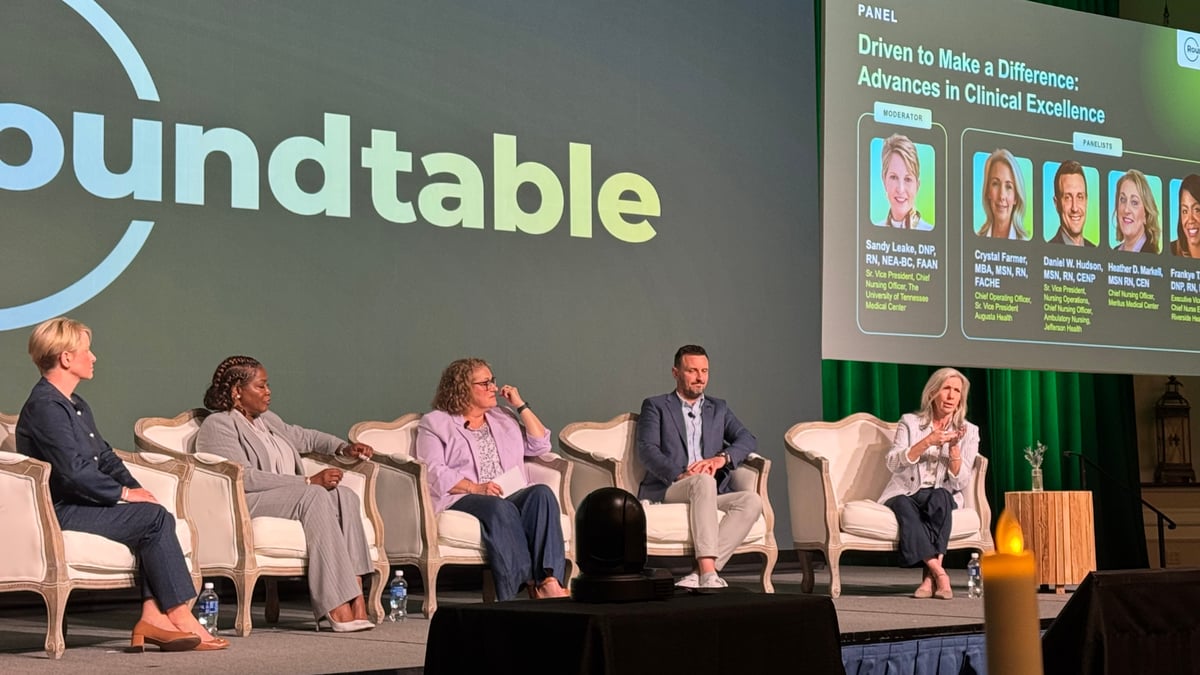
On May 27-29, Executive VP of Operations, Vasco Lopes da Silva, and VP of Business Development, Caleb Littlejohn, attended the Qualivis Roundtable 2026, one of the sector's most substantive annual gatherings for healthcare workforce leaders. The conversations reinforced much of what we hear directly from hospital partners, and offered useful context for how the wider sector is thinking about the future of healthcare staffing.
Financial pressure and rising demand shaping hospital capacity
One of the strongest themes throughout the Roundtable was the growing financial pressure facing U.S. hospitals. Discussions highlighted that nearly 40% of hospitals are currently operating at a loss, while more than 41% of providers reported claim denial rates exceeding 10%. These challenges are forcing healthcare leaders to carefully balance financial sustainability with maintaining safe staffing levels and quality patient care.
At the same time, demand for healthcare services continues to rise. By 2030, one in five Americans will be over the age of 65, with most managing at least one chronic condition. Providers are also seeing a concerning increase in chronic illnesses among younger populations, with rates in adults aged 18 to 34 rising by 7%. Together, these trends point to a long-term increase in patient acuity and care needs, reinforcing the importance of building resilient workforce strategies that can support hospitals through both financial and demographic change.
Workforce instability and retention challenges
Workforce stability was another recurring theme across the Roundtable discussions. Providers continue to navigate significant staffing pressures, reflected in an 18.3% turnover rate, more than 200,000 unfilled healthcare roles, and burnout affecting 62% of clinicians. Against a backdrop of growing patient demand and ongoing financial constraints, these challenges remain top of mind for healthcare leaders across the country.
Alongside the scale of the workforce shortage, there was considerable discussion around what drives retention. Research presented during the event suggested that up to 44% of workforce turnover may be preventable through improvements in system design, leadership effectiveness, and the day-to-day experience of frontline clinicians. The findings reinforce a broader shift in thinking across the sector: workforce stability is increasingly being viewed as an organizational outcome shaped by culture, support, and operational effectiveness, rather than solely a recruitment challenge.
Rethinking staffing models and long-term workforce stability
Hospital leaders increasingly described premium labor, including travel nursing, overtime, and agency staffing, as necessary for flexibility, but difficult to rely on for long-term planning. Recruitment of international healthcare professionals was raised as one of the more structured approaches being considered, particularly for organizations looking to reduce dependence on reactive staffing.
Within that context, international nursing pathways were referenced as an established route to building permanent capacity. With various visa options that allow international healthcare professionals to become available within 3-6 months, these nurses enter through fully compliant immigration pathways and demonstrate high levels of conversion from contract to permanent roles within hospital systems.
For Conexus, these conversations reinforced a consistent message: workforce stability is shaped as much by what happens after placement as by how roles are filled. Alongside expanding access to qualified international clinicians, our focus is on the factors that determine whether those placements succeed in practice.
This includes clinical preparedness before deployment, cultural and professional integration into new healthcare environments, and ongoing structured support throughout the entire placement. This comprehensive approach supports both internationally educated clinicians and hospital partners, improving transition into practice, increasing retention, and contributing to more stable long-term staffing outcomes.
Is your organization exploring more sustainable approaches to long-term workforce stability?


-Aug-27-2026-04-09-14-5973-PM.png?width=800&name=Blog%20Featured%20Images%20(1)-Aug-27-2026-04-09-14-5973-PM.png)